Formula Electric Carbon Fiber Monocoque Calculator (CFMC) 🏎️
Python-Based Engineering Tool for Composite Chassis Design
Project Overview
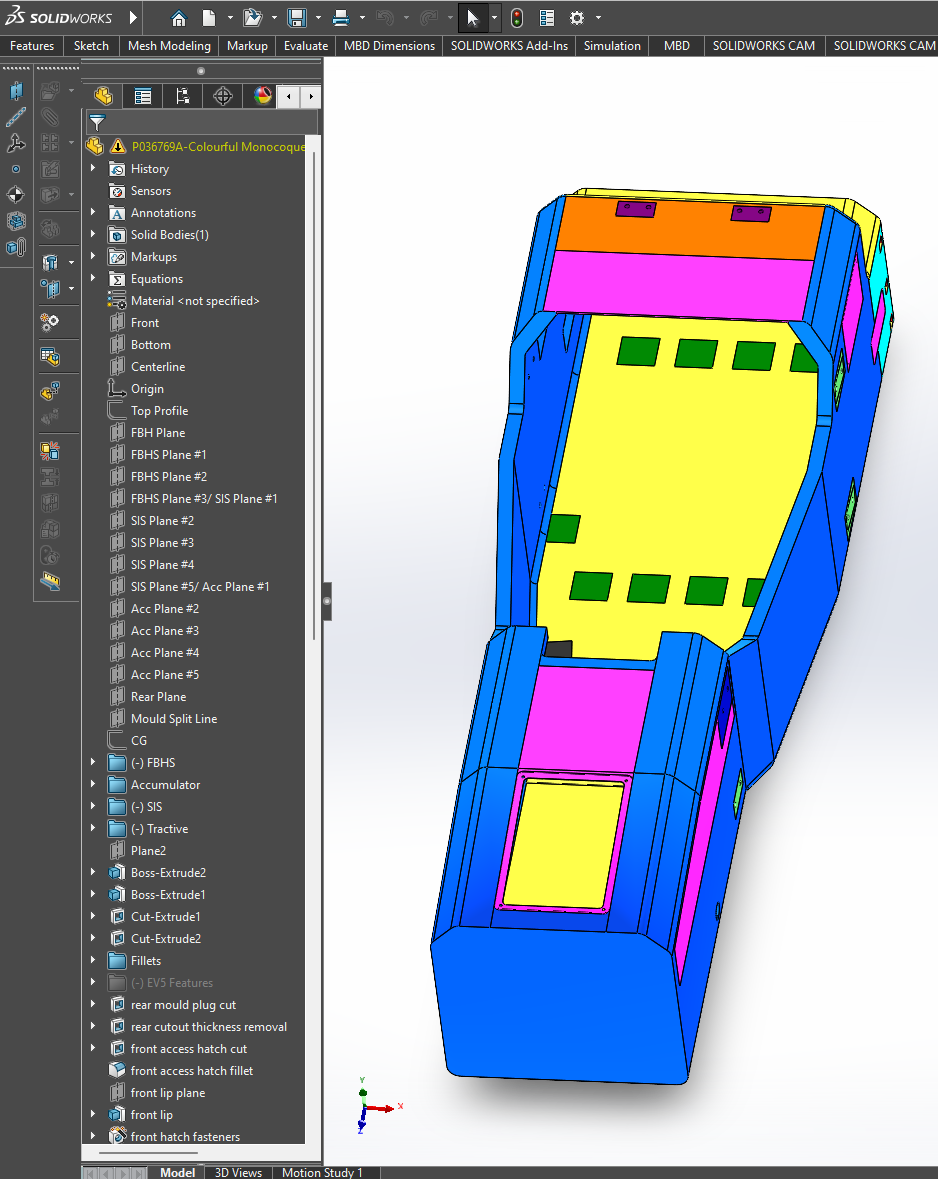
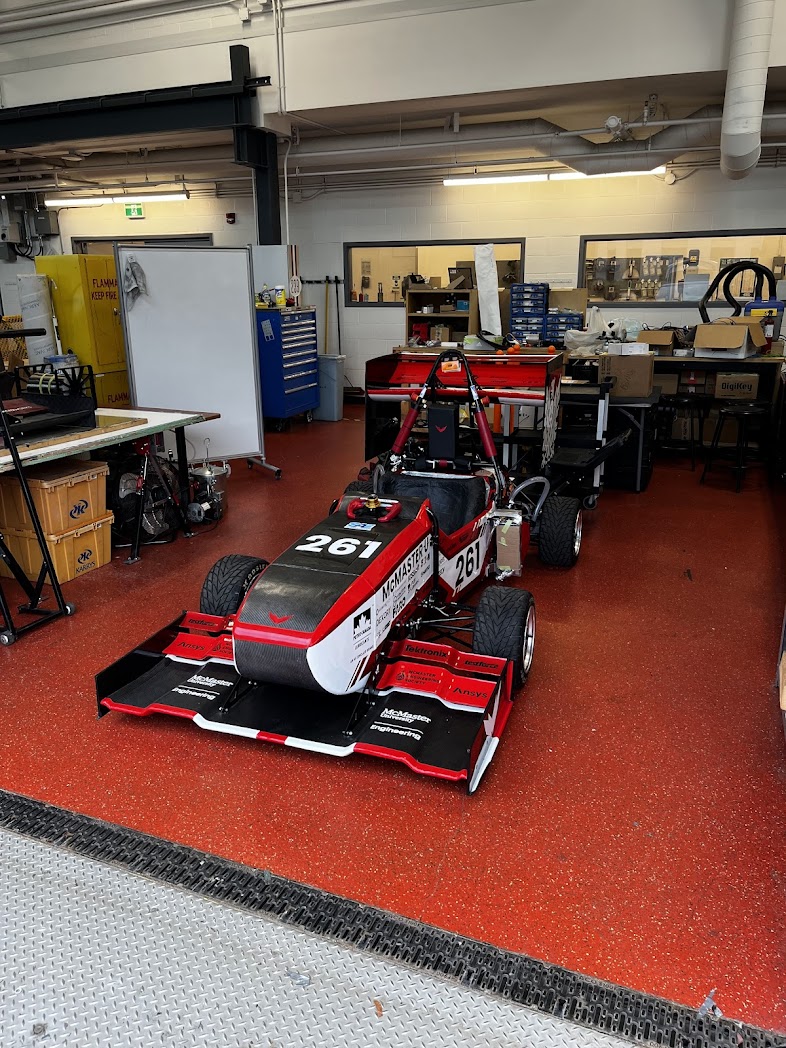
As part of the Formula Electric team, I developed a Carbon Fiber Monocoque Mass Calculator (CFMC) to support the early-stage design and optimization of our composite chassis. The monocoque is the primary structural element of the car, responsible for meeting strict Formula SAE SES requirements while minimizing mass. Accurately predicting carbon and core mass is therefore critical for stiffness targets, weight budgeting, and material procurement.
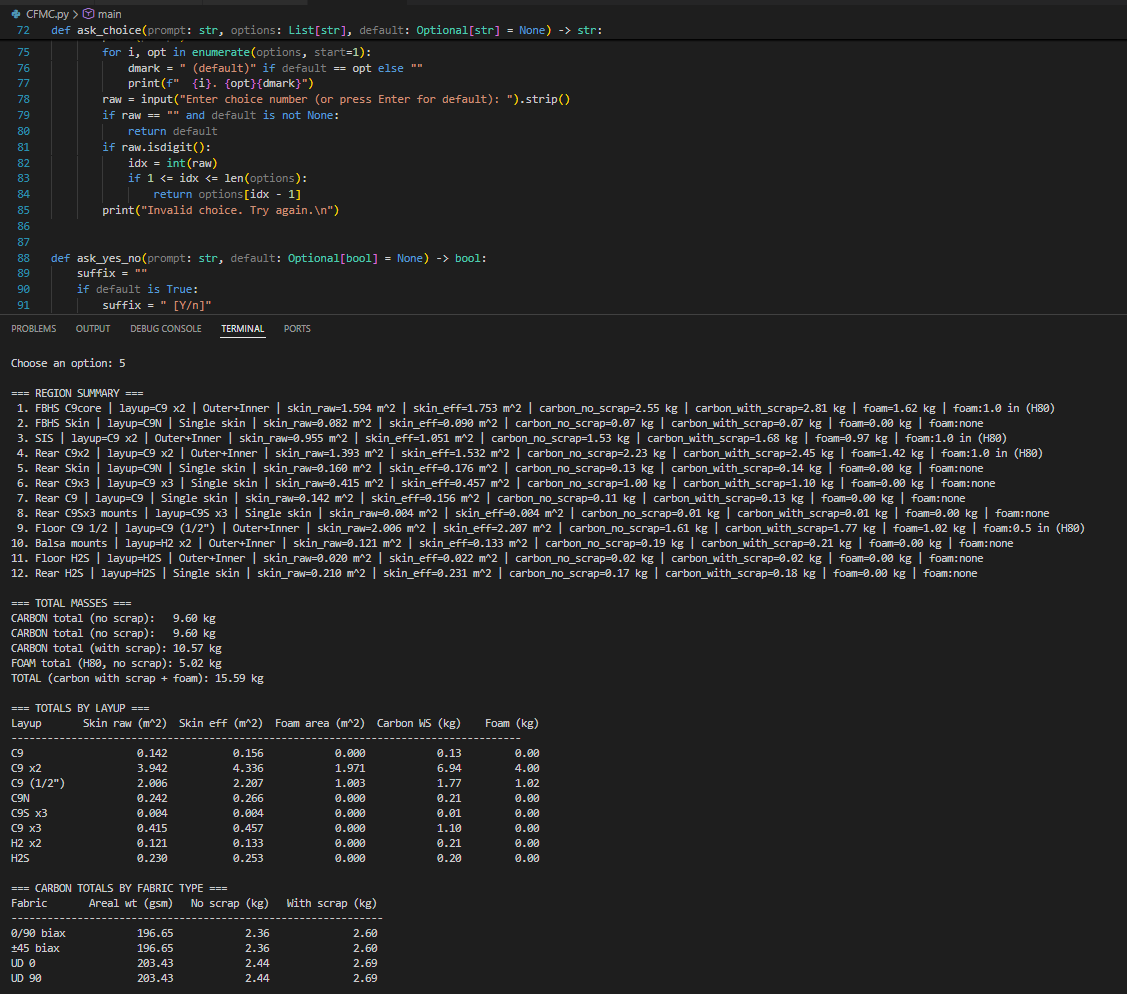
The CFMC allows the chassis to be broken down into discrete geometric regions such as side panels, floor, and bulkheads each assigned a specific layup and sandwich configuration. Using material datasheets and layup definitions consistent with our manufacturing process, the tool computes carbon fiber skin mass, foam core mass, and total monocoque mass in a repeatable and auditable way. This replaces error-prone spreadsheets and enables rapid iteration as the chassis design evolves.
Project Reflection
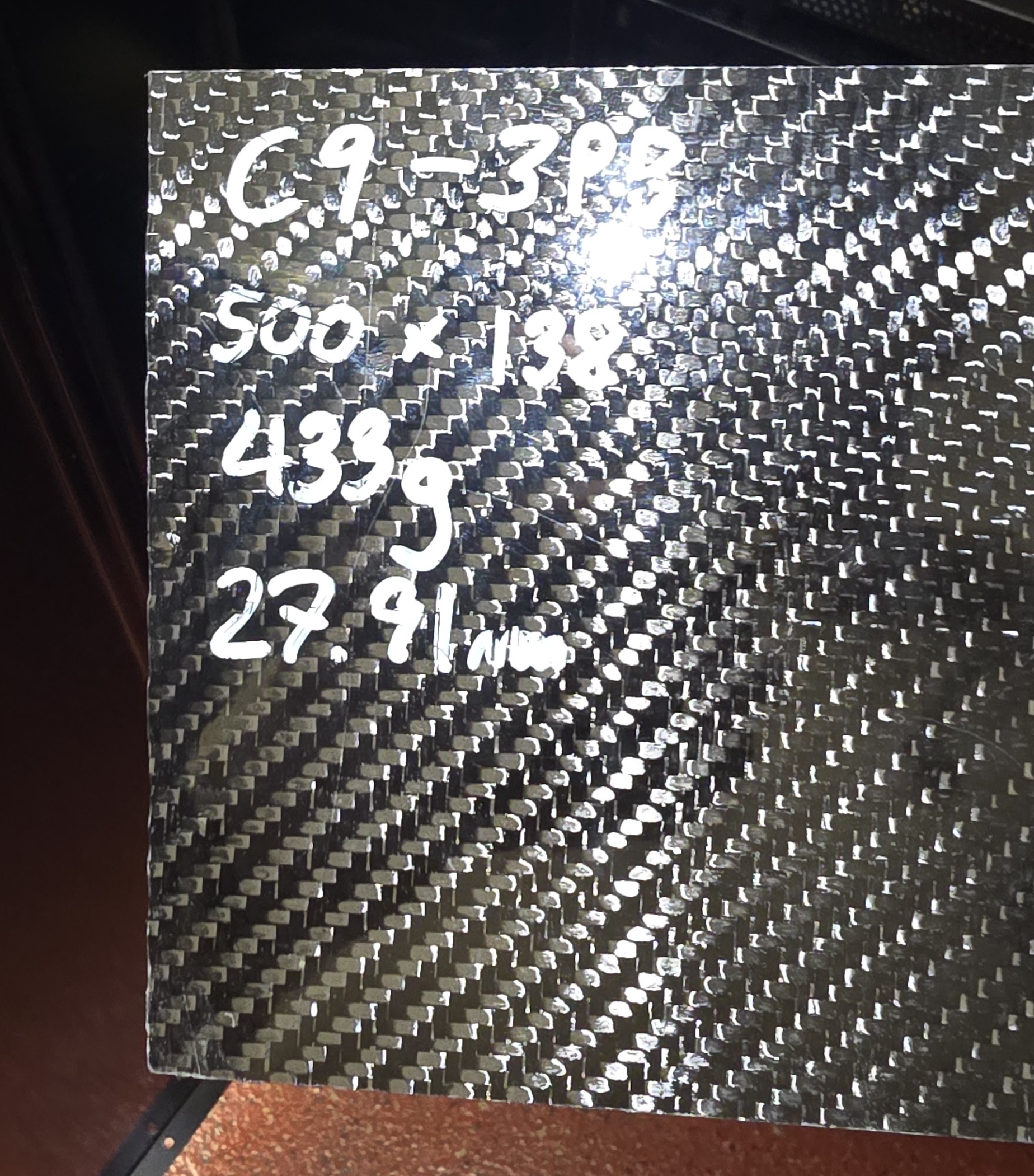
This project pushed me to translate composite theory into a practical, engineering-ready tool. Implementing the CFMC required explicitly defining assumptions around layup stacking, skin symmetry, scrap application, and core geometry, highlighting how small modeling choices can significantly affect predicted mass and design decisions. I also gained a deeper appreciation for unit discipline and physical sanity checks, validating foam densities, thicknesses, and results against known FSAE monocoque mass ranges. By structuring the calculator around modular regions and standardized layups, I learned how to replace one-off calculations with a reusable, extensible tool that supports rapid iteration and clearer technical communication during chassis design.